


The content of this guide is for informational and educational purposes only and is not intended as medical advice. Always consult with a qualified healthcare provider before using any compound discussed here. We do not condone the human use of research chemicals.
Nobody is talking about…
How there’s a peptide that coordinates tissue repair everywhere: your heart, joints, skin, brain, eyes, and EVEN hair follicles.
The peptide market buried it under the wrong name for over a decade.
Most people who injected “TB-500” never even had it in the vial.
And even the FDA seemingly has a hard time grasping this.
On July 23, 2026, the FDA’s Pharmacy Compounding Advisory Committee voted eight to six, with one abstention, to recommend TB-500 for the 503A bulk compounding list (FDA meeting record and webcast). The vote was an advisory recommendation. Formal FDA rulemaking remains pending.
Full-length thymosin beta-4 appeared throughout the briefing, but it was never the substance on the agenda or the molecule the committee voted on.
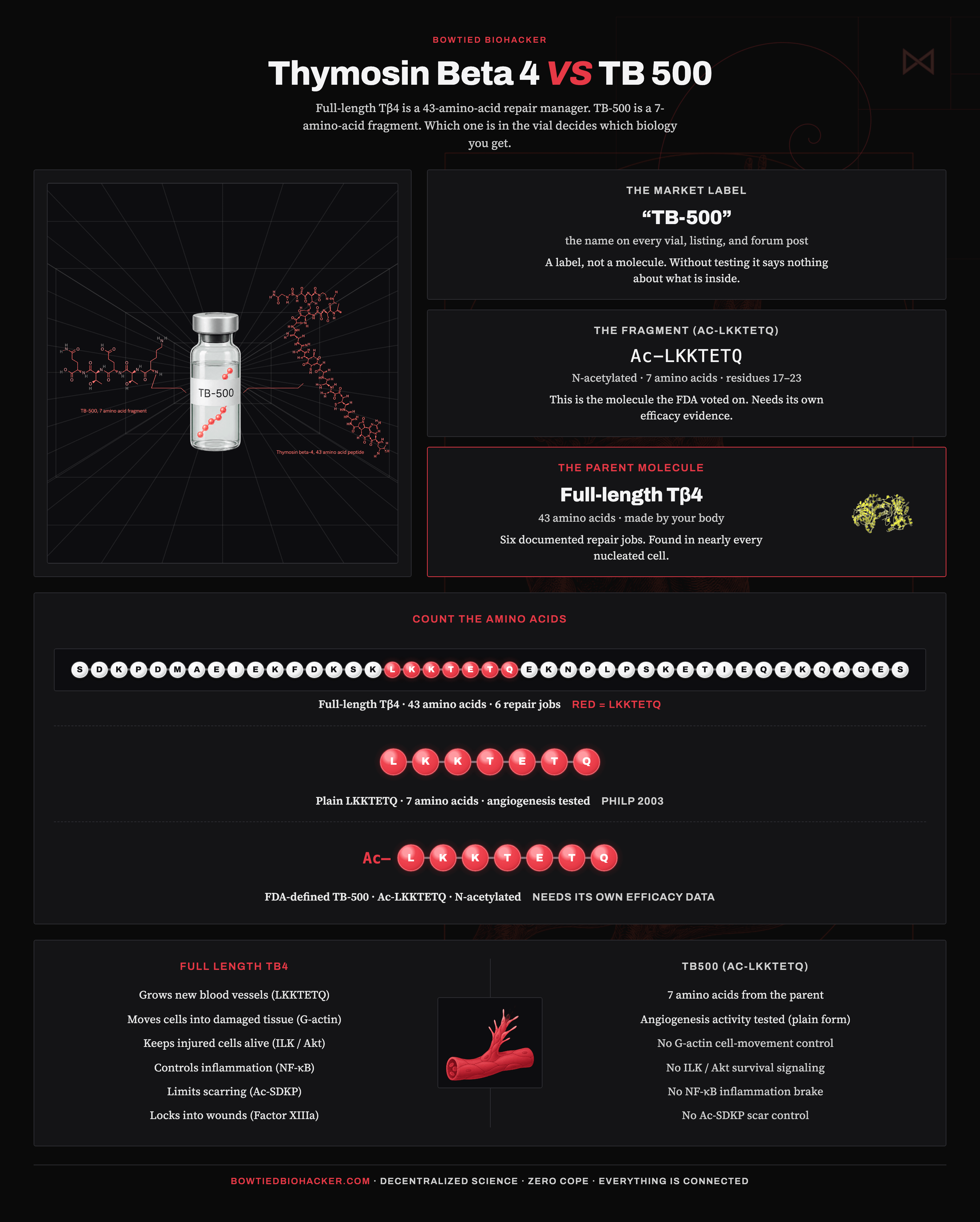
The FDA’s own 41-page TB-500 briefing defines TB-500 as N-acetylated LKKTETQ, a synthetic seven-amino-acid fragment matching positions 17 through 23 of thymosin beta-4. Full-length Tβ4 contains 43 amino acids after its initiator methionine is removed. It carries that sequence plus the rest of the repair system.
You want soft tissue that repairs, joints that stop keeping score, faster recovery, better wound healing, and a real solution to hair loss. So the name matters because the structure determines which repair jobs the molecule is good for.
Currently, 3 different molecules are being called TB-500:
FDA defined it as Ac-LKKTETQ
Regular LKKTETQ used in fragment research (actual TB-500)
Full length Tβ4 AKA The GOAT
Luckily, the market incompetency ACTUALLY works in the consumers favor for once:
Most of the time “TB-500” listings are Tβ4 and Tβ4 Frag listings are TB-500
But not always. Especially not when dealing with the generic Chinese resellers - you kinda just get whatever LOL.
This would explain the discrepancy in reports. Tβ4, is an endogenous thymus peptide with a ton of evidence. The results are nothing short of phenomenal, and the applications are seemingly endless. If you had to pick only 1 peptide to run for the rest of your life, a lot of the time this would be your best bet.
When you hear recovery stories that sound ridiculous, they surely were running the 43 amino acid Tβ4. (SWIM healed calcified tendinitis/bursitis and frozen should syndrome in under a month after an Orthopedic Surgeon and Physical therapist said it would take ~9 months)
The reports that go something like “kinda helped my joints a bit” or “didn’t do anything” almost certainly recieved the fragment, degraded material, or Chinese mystery powder.
There is still a lot of actual TB-500 sold as TB-500. If your experience was anything less than life changing, you either dosed too low or you never had thymosin beta-4 in the vial.
This article will give you the internet’s most complete thymosin beta 4 and TB-500 guide. We go through all three molecules, map the major mechanisms, walk through the heart, brain, eye, wound, fibrosis, and hair evidence, explain the dose reality, and more!
Left Curve TL;DR
TB-500 is a fragment. TB4 is the full molecule. They are not the same thing.
TB4 has 43 amino acids. TB-500 has 7. The 7 came from the 43. Most of the repair power lives in the 43.
TB4 keeps injured cells alive, sends healing signals to the damage site, grows new blood vessels, and shuts off inflammation when the job is done.
It locks on to wounds regardless of where it’s injected.
It stops repairs from creating scar tissue AND reduces existing scar tissue.
TB4 doubled heart pumping power and cut scar tissue in half after a heart attack.
TB4 turned on hair follicle stem cells and grew hair.
The eye data reached human trials. Corneas healed. Phase III is running now.
80 people received TB4 IV megadoses in a safety trial. No adverse events were attributed to it.
Most people who say “TB-500 did nothing” either had the fragment instead of the TB4, had a bad batch, or ran a dose too low to matter.
Common starting dose is 2 to 5 mg injected subcutaneously twice a week. Some run 5 to 10 mg per day after building the foundation.
You still need sunlight, sleep, minerals, protein, blood flow, and real food.
Verify what is in the vial. The name on the label can’t be trusted.
The Repair Mechanisms
The phrase “healing peptide” hides the mechanisms. Tβ4 helps cells move, grow capillaries, shut inflammation down on time, replace damaged matrix, survive injury, and rebuild missing tissue.
Tβ4 is a 43 mino acid acidic peptide found in nearly every nucleated cell and in extracellular fluids (Goldstein, Hannappel, and Kleinman, 2005). In resting human polymorphonuclear leukocytes, a type of white blood cell, it sequesters most available G-actin at a reported cytoplasmic concentration of 149 ± 80.5 µM. Cassimeris, Safer, Nachmias, and Zigmond mapped this role in 1992.
Actin lets cells move, reshape, divide, seal wounds, and enter damaged tissue. Tβ4 holds a reserve of unpolymerized G-actin, the loose building blocks cells need when repair starts. That makes it the logistics manager for cellular movement.
Activated platelets release Tβ4. Factor XIIIa cross-links it into fibrin and collagen.
The body puts the molecule at the scene and bolts it into the temporary wound scaffold. Your platelets do this before any committee can finish arguing about whether the mechanism exists.
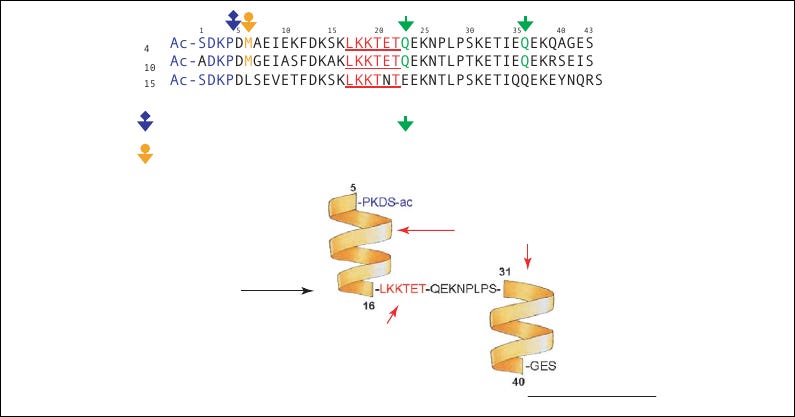
Tβ4 holds the G-actin supply that cells use for movement and reconstruction. The structure explains the repair behavior.
7 Amino Acid Frag vs 43 Amino Acid Peptide
Plain LKKTETQ is a repair signaling molecule with a narrow scope. Full-length Tβ4 carries that sequence plus the rest of the repair network. FDA-defined Ac-LKKTETQ as a third evidence object/
The central LKKTETQ motif contains the main actin-binding region. The non-acetylated fragment made blood-vessel lining cells migrate and build tube-like structures in experimental models (Philp et al., 2003).
The peptide market used the TB4 research as sources for TB-500 benefit claims.
Also, import not regarding the FDA’s TB-500 (Ac-LKKTETQ), which is the TB-500 frag with an acetyl group added to the first amino acid. The 2003 mouse wound study used non-acetylated LKKTETQ.
Acetylation changes how the fragment dissolves, metabolizes, and binds.
The FDA briefing states that results from the plain fragment cannot be transferred directly to TB-500. In a 2024 fibroblast scratch assay cited by FDA, Ac-LKKTETQ failed to improve closure at the tested concentration while one shorter metabolite produced a small effect (FDA briefing, pp. 24-26).
The result limits the claim. Findings from full-length Tβ4 or plain LKKTETQ cannot be assigned to Ac-LKKTETQ without testing it.
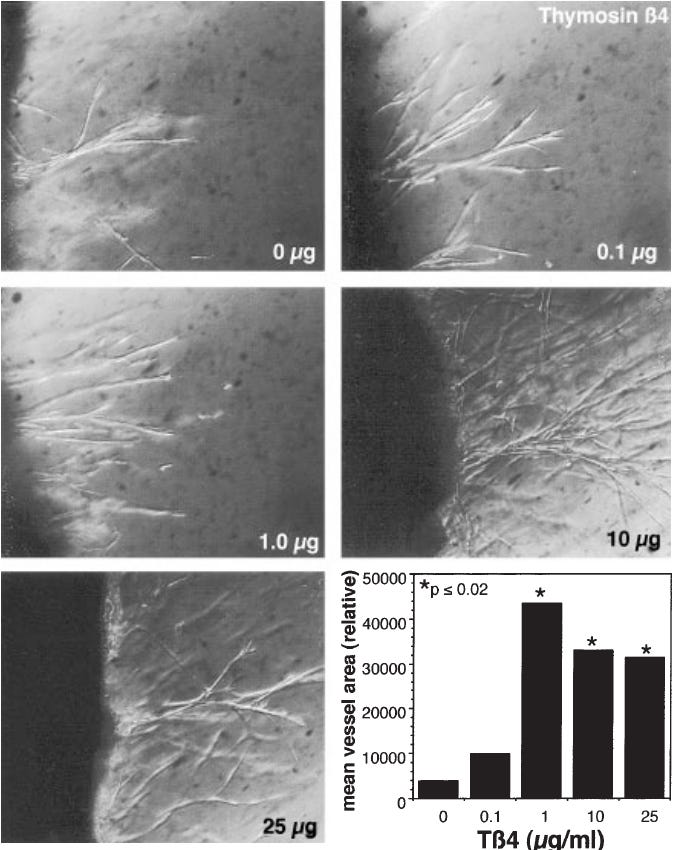
Full-length Tβ4 stimulated coronary capillary sprouting in this assay (Grant et al.). Separate fragment experiments support an angiogenic role for non-acetylated LKKTETQ.
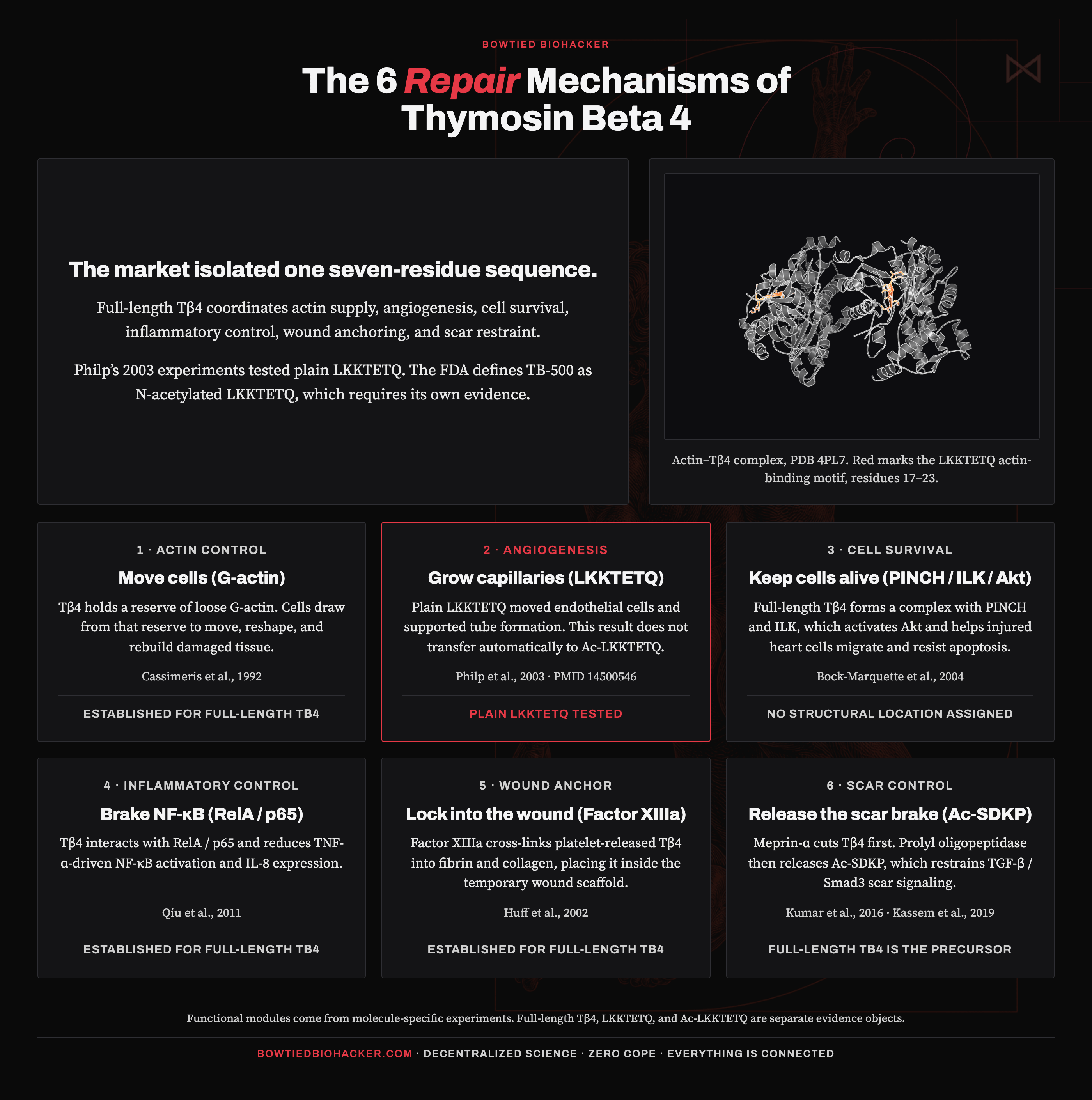
The real Tβ4 coordinates six well-documented repair jobs:
Move cells. Tβ4 holds the loose G-actin supply that cells use to move, reshape, and rebuild (Cassimeris et al., 1992).
Grow capillaries. Plain LKKTETQ supports migration and tube formation by blood-vessel lining cells (Philp et al., 2003).
Keep cells alive. Full-length Tβ4 forms a complex with PINCH and ILK, activates Akt, and helps injured heart cells migrate and resist death (Bock-Marquette et al., 2004).
Control inflammation. Tβ4 interacts with RelA/p65 and suppresses NF-κB, a master switch for inflammatory genes, in cell models (Qiu et al., 2011).
Lock into the wound. Factor XIIIa cross-links platelet-released Tβ4 into fibrin and collagen (Huff et al., 2002).
Release the scar brake. Meprin-α cuts Tβ4 first. Prolyl oligopeptidase then releases Ac-SDKP, which restrains TGF-β/Smad3 scar signaling (Kumar et al., 2016; Kassem et al., 2019).
Tβ4 also localizes inside the nucleus (Huff et al., 2004; Zoubek and Hannappel, 2007). The transport behavior is documented. Its exact nuclear job remains unresolved, so it is not counted as a seventh module.
The Vilon Connection
Tβ4 is a plausible sequence parent for Vilon, the synthetic Lys-Glu dipeptide sold as KE. Mature human Tβ4 contains KE at residues 31 and 32 inside PSKET (UniProt P62328). Vilon came from the Russian thymic bioregulator program, designed from the amino-acid composition of Thymalin and other thymic signals (Khavinson and Morozov, 2000). We published a full Vilon deep-dive covering the thymic bioregulator lineage, the epigenetic data, and the immune remodeling signal.
Why TB4 Seems Too Good to Be True
Heart, cornea, brain, skin, and hair all reuse the same repair mechanisms. Every injured tissue must move cells, rebuild blood supply, control inflammation, preserve viable cells, clear damaged matrix, and prevent repair from hardening into scar.
Those shared mechanisms are why one molecule keeps showing up across completely different tissues.
The Scar Brake
Meprin-α first cuts full length Tβ4, then prolyl oligopeptidase releases N-acetyl-seryl-aspartyl-lysyl-proline, or Ac-SDKP (Kumar et al., 2016). This fragment suppresses TGF-β/Smad3 signaling, restrains fibroblasts, and reduces the chance that repair hardens into scar (Kassem et al., 2019). The parent carries rebuilding signals plus the precursor for its own scar brake.
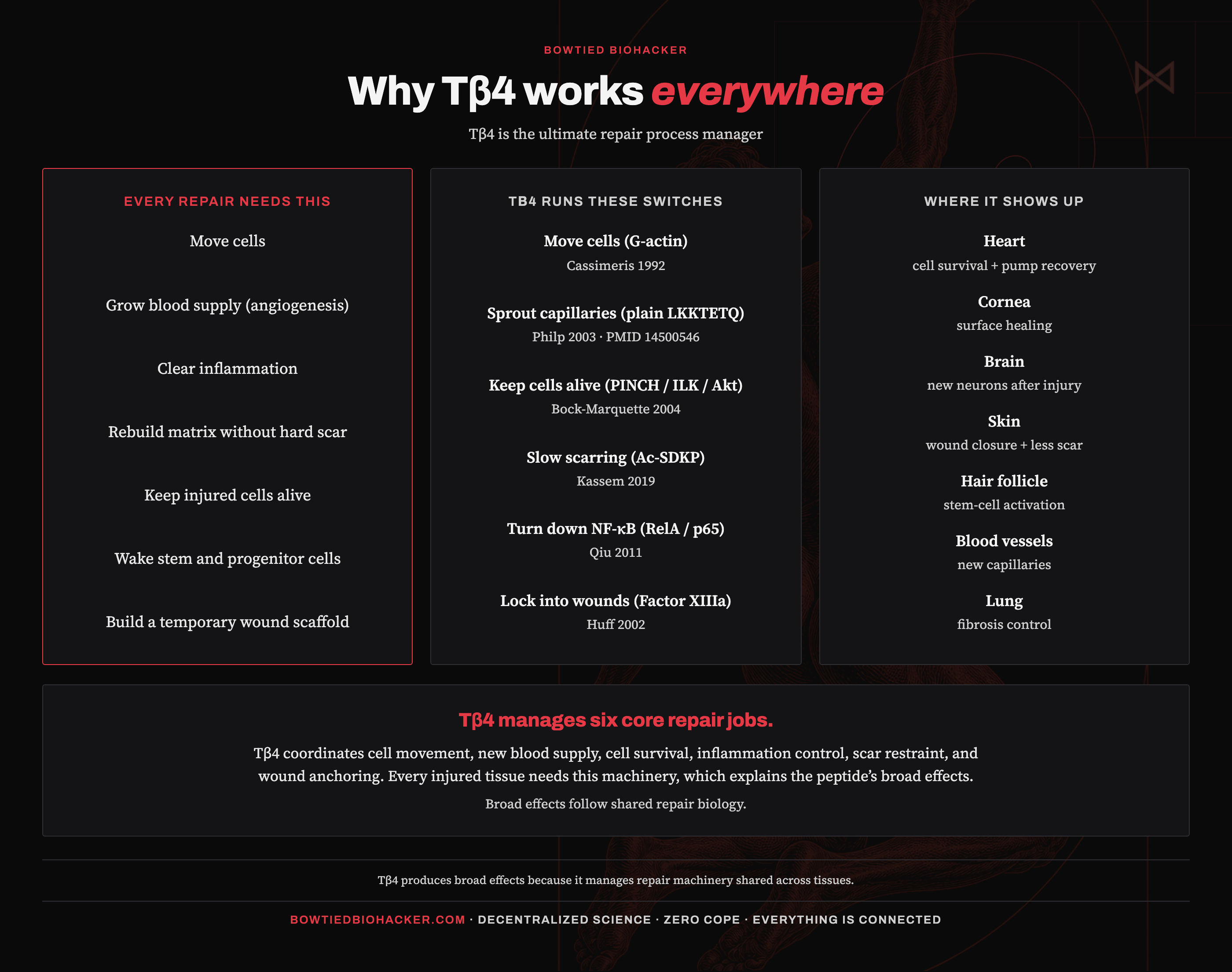
Tβ4 manages shared repair processes, so the same molecule can matter in several tissues.
The Cardiac Proof
The strongest animal proof case is the 2004 Nature paper from Bock-Marquette, Saxena, White, DiMaio, and Srivastava. In a mouse myocardial infarction model, thymosin beta-4 after coronary ligation activated integrin-linked kinase, promoted cardiac cell migration and survival, and improved cardiac repair.
The in vivo result was large. Fractional shortening rose from 23.2 ± 1.2 percent to 37.2 ± 1.8 percent. Left-ventricular ejection fraction rose from 28.2 ± 2.5 percent to 57.7 ± 3.2 percent, and scar volume fell by about half. These numbers came from mice. They establish an animal repair effect and provide no human post-heart-attack protocol.
The mechanism ran through the PINCH/ILK/Akt survival complex. Tβ4 helped heart cells migrate and stay alive after injury. Capillary growth alone cannot explain that result, and the seven-amino-acid fragment does not inherit the full-length protein interaction for free.
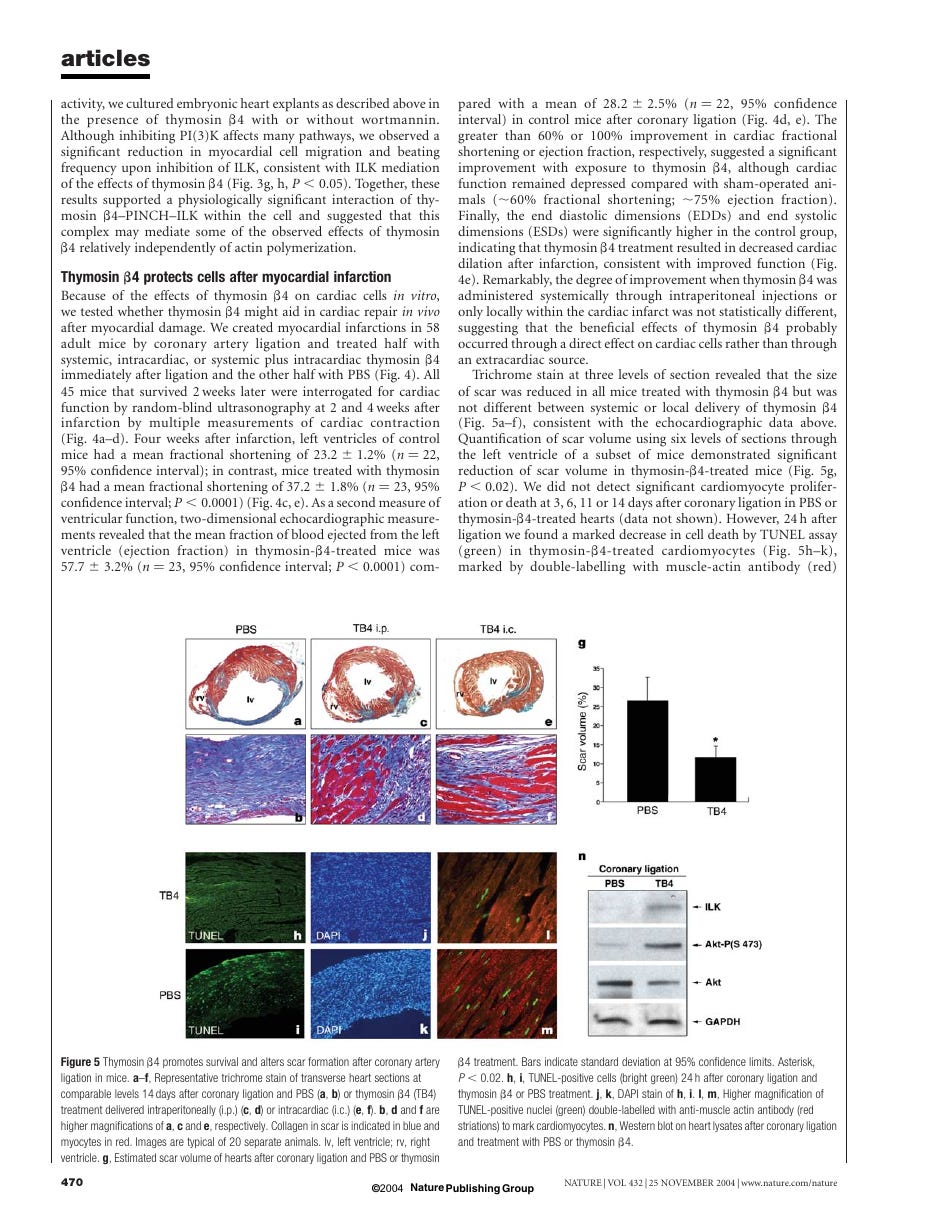
Tβ4 cut scar volume after coronary ligation in mice (Bock-Marquette et al., 2004).
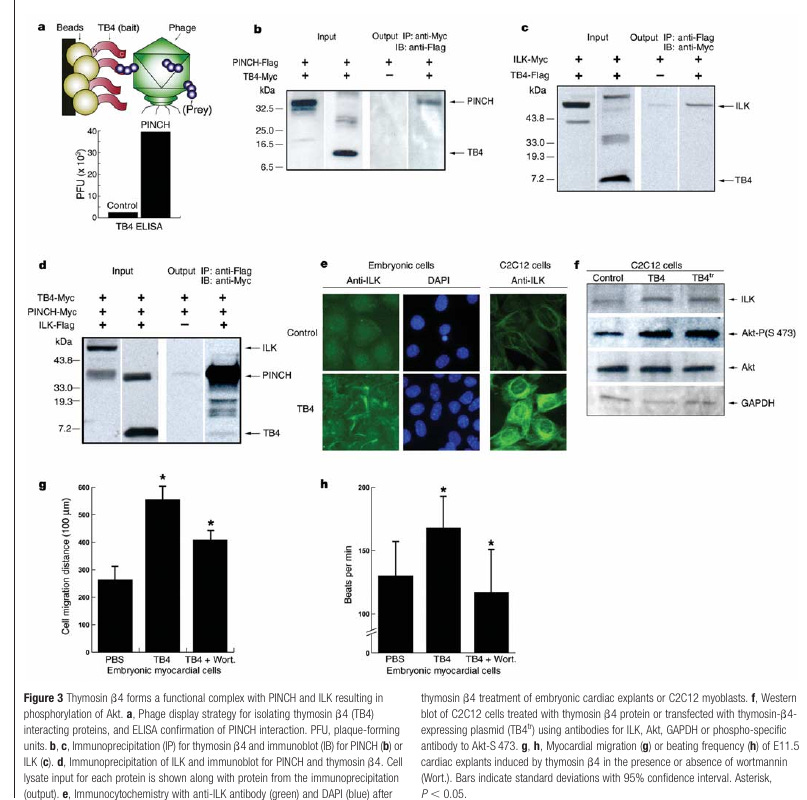
The PINCH/ILK/Akt complex links full-length Tβ4 to heart-cell migration and survival (Bock-Marquette et al., 2004).
The Hair Section Everyone Will Misread
Tβ4 gives a damaged follicle the tools we just mapped out: cell movement, blood supply, inflammation control, matrix remodeling, and stem-cell activation. That makes the hair question a cellular environment question.
The standard model for Male Pattern Baldness (incorrectly dubbed Androgenic Alopecia) blames DHT for the damage it finds DHT (a wound healing molecule) trying to repair.
Our Energetic Alopecia framework follows the injury in the correct order. We broke down the full DHT story in the Ultimate Guide to DHT Optimization, and the complete practical protocol lives in Stop Hair Loss and Regrow Hair in Weeks.
First, galea tension and poor microcirculation compress the scalp tissue in the same pattern that later goes bald. Artificial light, circadian disruption, inflammatory load, and mitochondrial damage deepen the energy deficit. Hypoxia and repeated microinjury raise reactive oxygen species and NADPH demand. Because 5-alpha reductase uses NADPH, the damaged tissue increases local DHT production as part of its repair response. When the follicle lacks enough ATP, oxygen, and raw material to regenerate, collagen scar replaces working tissue.
DHT is found at the injury because the body recruited it there. DHT either grows hair through Wnt/β-catenin signalling (why many users of exogenous DHT paradoxically report faster and thicker growing hair) or miniaturization, depending on the cellular environment. Finasteride blocks that repair signal while leaving tension, low oxygen, mitochondrial failure, inflammation, and fibrosis in place.
The cell data fit this model. In healthy dermal papilla cells, DHT did not shut down Wnt-driven growth across the tested concentrations. Suppression appeared in cells taken from androgenetic alopecia tissue, where androgen-receptor signaling and inflammation were already altered (Kwack et al., 2008; Chen et al., 2020). The tissue state changes the result.
In rats and mice, Philp et al., 2004 reported hair growth through activation of hair follicle stem cells. In mouse transgenic and knockout models, Gao and colleagues later showed Tβ4-induced hair growth with changes in VEGF, ERK, AKT, and P38 phosphorylation.
Both studies used rodents. They establish a coherent hair-growth mechanism. No controlled human scalp trial has established the effect in people.
For the actionable protocol addressing the root causes we just described (light environment, microcirculation, scalp tension, mitochondrial support), see the full hair regrowth protocol on this Substack.
The follicle is a visible stem-cell niche. A useful Tβ4 hair assessment asks whether that niche can use the signal:
Does the follicle have enough ATP, oxygen, blood flow, and raw material to rebuild?
Is the follicle’s protection from immune attack intact, or is inflammatory signaling still active?
Has fibrosis replaced working matrix around the follicle?
Can the repair signal finish before the scalp falls back into the same injury loop?
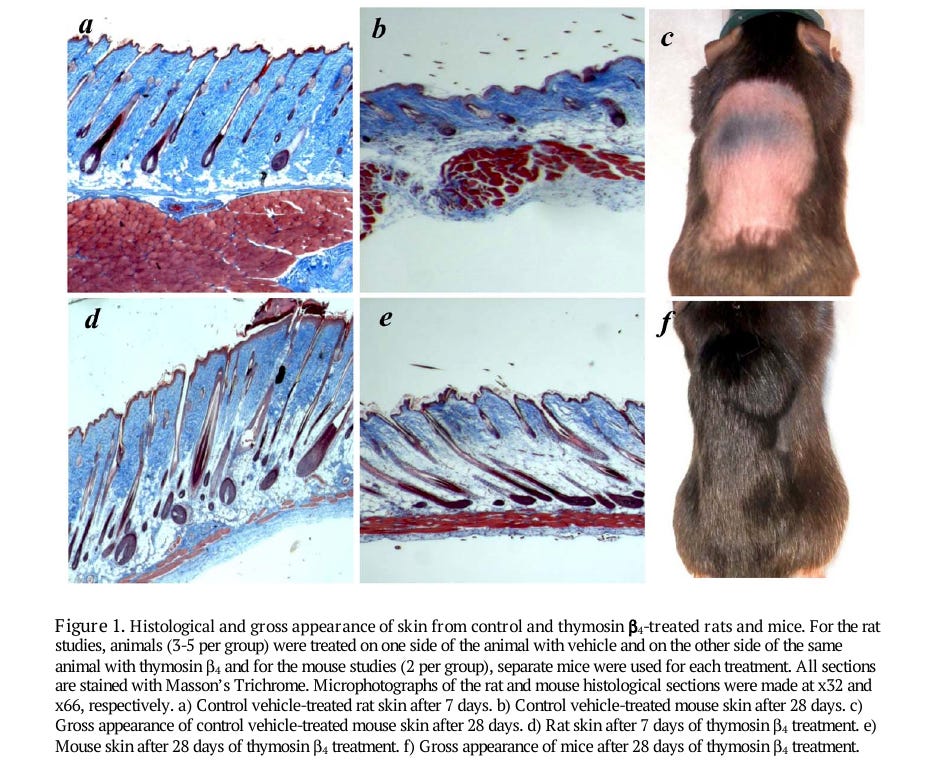
Tβ4 activated follicle stem cells and increased hair growth in rat and mouse skin (Philp et al., 2004).
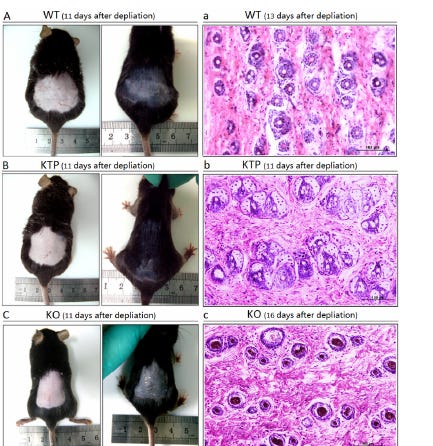
Tβ4 changed VEGF, ERK, AKT, and P38 signaling while increasing mouse hair growth across genetic models (Gao et al., 2015).
More Tβ4 Effects in the Literature
Human treatment data, animal structure-and-function data, molecular mechanisms, and field reports answer different questions. Read each result for what it measured.
Formal development followed tissues with visible endpoints and commercial funding. That is why the eye program reached human trials while the gym use case runs on mechanisms, animal repair data, and field reports. Funding history does not change biological first principles, but it is why only some outcomes have been measured in people.
Human Eye Treatment
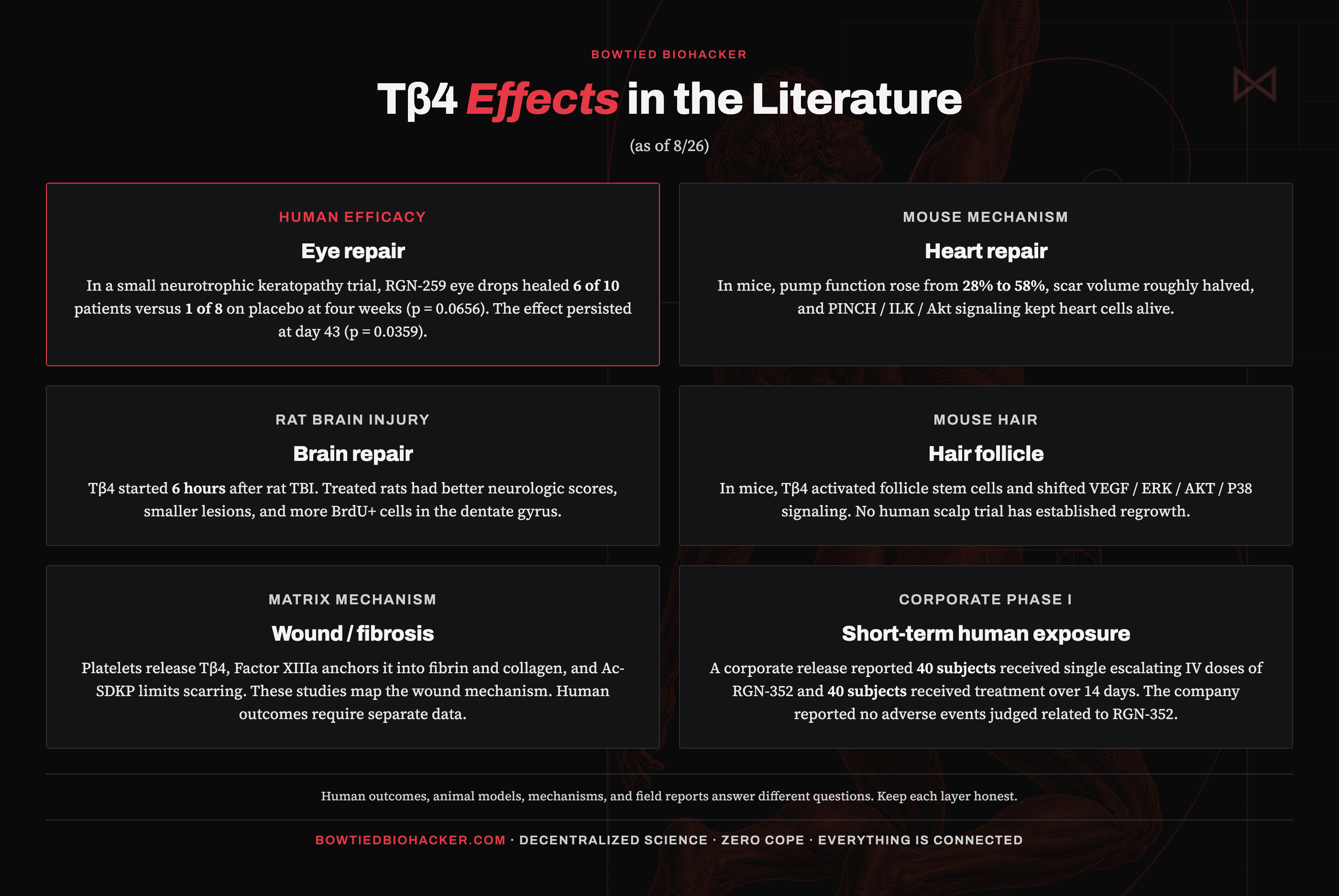
In a randomized trial of 0.1% RGN-259 ophthalmic solution for stage 2 to 3 neurotrophic keratopathy, complete healing at day 29 occurred in 6 of 10 RGN-259 subjects versus 1 of 8 placebo. The p value was 0.0656, which missed the conventional 0.05 threshold. At day 43, two weeks after treatment stopped, the difference reached p=0.0359 with no recurrent defects in the healed RGN-259 subjects, while the one healed placebo subject recurred.
The trial gives direct human treatment evidence for the cornea. It says nothing by itself about tendons, heart, brain, or hair.
RGN-259 has also entered Phase III ophthalmic development (ClinicalTrials.gov NCT05555589).
Heart Structure and Function in Mice
After myocardial infarction in mice, the Nature 2004 study tied Tβ4 to PINCH/ILK/Akt survival signaling, raised ejection fraction from roughly 28 percent to 58 percent, and cut scar volume by about half.
Brain Repair in Rats
Xiong and colleagues started intravenous Tβ4 at 6 or 30 mg/kg six hours after controlled cortical impact in rats. Treated animals improved on neurological severity scores, had smaller lesions, and showed more BrdU-positive new cells in the dentate gyrus.
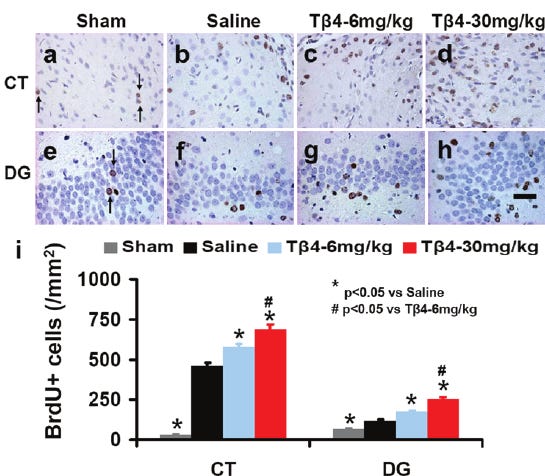
Tβ4 increased BrdU-positive new cells after traumatic brain injury in rats (Xiong et al., 2012).
Hair Follicle Activation in Rodents
Philp et al. and Gao et al. activated follicle stem-cell and growth pathways in rats and mice. A controlled human scalp trial has not been published.
Wound Scaffold and Scar Control
Platelets release Tβ4 into wounds. Factor XIIIa attaches it to fibrin and collagen (Huff et al., 2002). Tβ4 also promotes matrix metalloproteinases that clear damaged scaffold (Philp et al., 2006), while sequential meprin-α and prolyl oligopeptidase cleavage creates the Ac-SDKP scar-control fragment (Kumar et al., 2016; Kassem et al., 2019).
Human Safety Record
RegeneRx reported a Phase I intravenous RGN-352 program in 80 healthy volunteers: 40 received single escalating doses, and 40 received treatment over 14 days. The company reported no adverse events judged related to RGN-352. This is short-term human IV exposure reported in a corporate release. It cannot establish long-term safety or validate an internet dose.
Dosing & Human Trials
Two schools of thought here: the common 2 to 5 mg twice weekly schedule and SWIM’s preferred 2.5 to 10 mg per day, preferably when a solid foundation is already in place.
Human exposure includes 80 healthy volunteers in the intravenous Phase I program and topical use in the ophthalmic program. Animal studies used different routes and far higher body-weight exposure, including Xiong’s rat TBI model.
The Foundation Hierarchy
Light environment and circadian timing to set the repair clock.
Mitochondrial redox capacity to produce the ATP rebuilding requires.
Oxygen and blood flow to reach the damaged tissue.
Mineral saturation so repair enzymes can work. Bloodwork confirms whether you are actually saturated or guessing.
Protein and energy substrate to build new tissue.
Movement and mechanical loading to tell the body what structure to keep.
Removal of infection, toxic load, or ongoing injury so the tissue stops taking damage faster than it can rebuild. The gut reset protocol is where most people need to start this process.
Active malignancy, uncontrolled infection, and unexplained inflammatory lesions change the risk calculation because blood vessel growth, cell survival, migration, and matrix remodeling can feed the wrong process.
Do not walk away thinking Tβ4 “heals everything”
Sourcing
Material identity is the single biggest variable in Tβ4 outcomes. If you do not know what is in the vial, nothing else in this guide matters.
PurePeptides.bio carries reliable generic TB4 for research purposes, if you would like more peace of mind than ordering from an anonymous vendor on WhatsApp. Code BOWTIED for 35% off. We do not receive commission on PurePeptides orders.
Limitless Life Nootropics is for the legitimate researchers that want the same pharmaceutical quality from USA compounding pharmacy facilities. Code BOWTIED for 15% off (account required). We receive a commission on Limitless Life purchases, which helps support this publication.
If you are stacking TB4 with BPC-157, the same sourcing rules apply. Verify the molecule, verify the vendor, and verify the foundation is in place before expecting results.
If you found this helpful, bookmark this guide, send it to the next person arguing about TB-500, and subscribe for the next mechanism first peptide deep dive.
What Next?
This guide covered the molecular map. The foundation that makes Tβ4 useful is built across these protocols (paid subscribers get the full implementation):
Can someone please recommend any trustworthy sources of TB4 in the U.K.?
Which markers, and what values count as saturated versus deficient? And for the other six foundational items, what's the equivalent test or threshold you use to confirm each is maxed out before concluding the peptide is the limiting factor?